
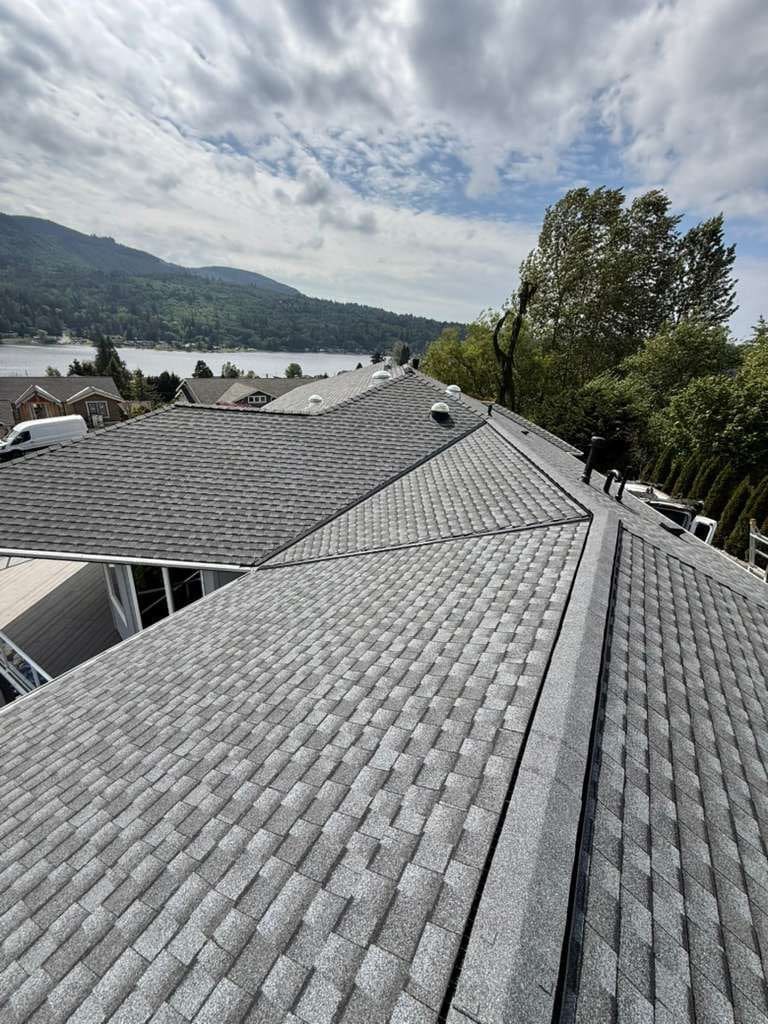
Roof Repair
Roof Water Damage Repair
A water-damage roof repair where an improperly positioned drainage detail had allowed moisture into the roofing system, addressed by removing the damaged decking and installing new shingles.
Project Snapshot
Service
Roof Repair
Roof Material
Asphalt Shingle
Step 01
The Warning Signs
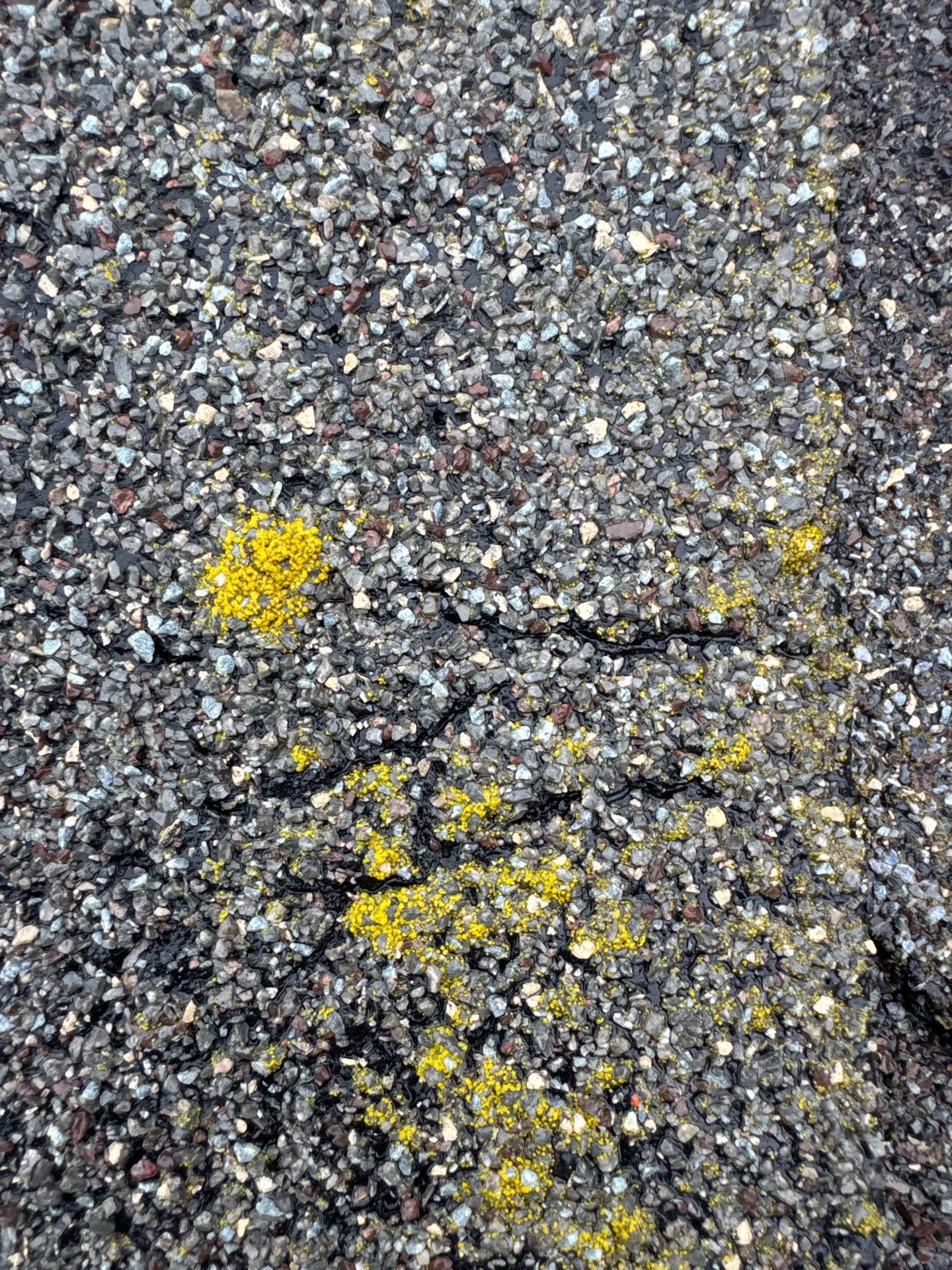
The roof was showing aging shingles with visible moss growth, along with early signs of water intrusion. None of it looked dramatic yet, which is often how roof problems start.
Step 02
What We Found
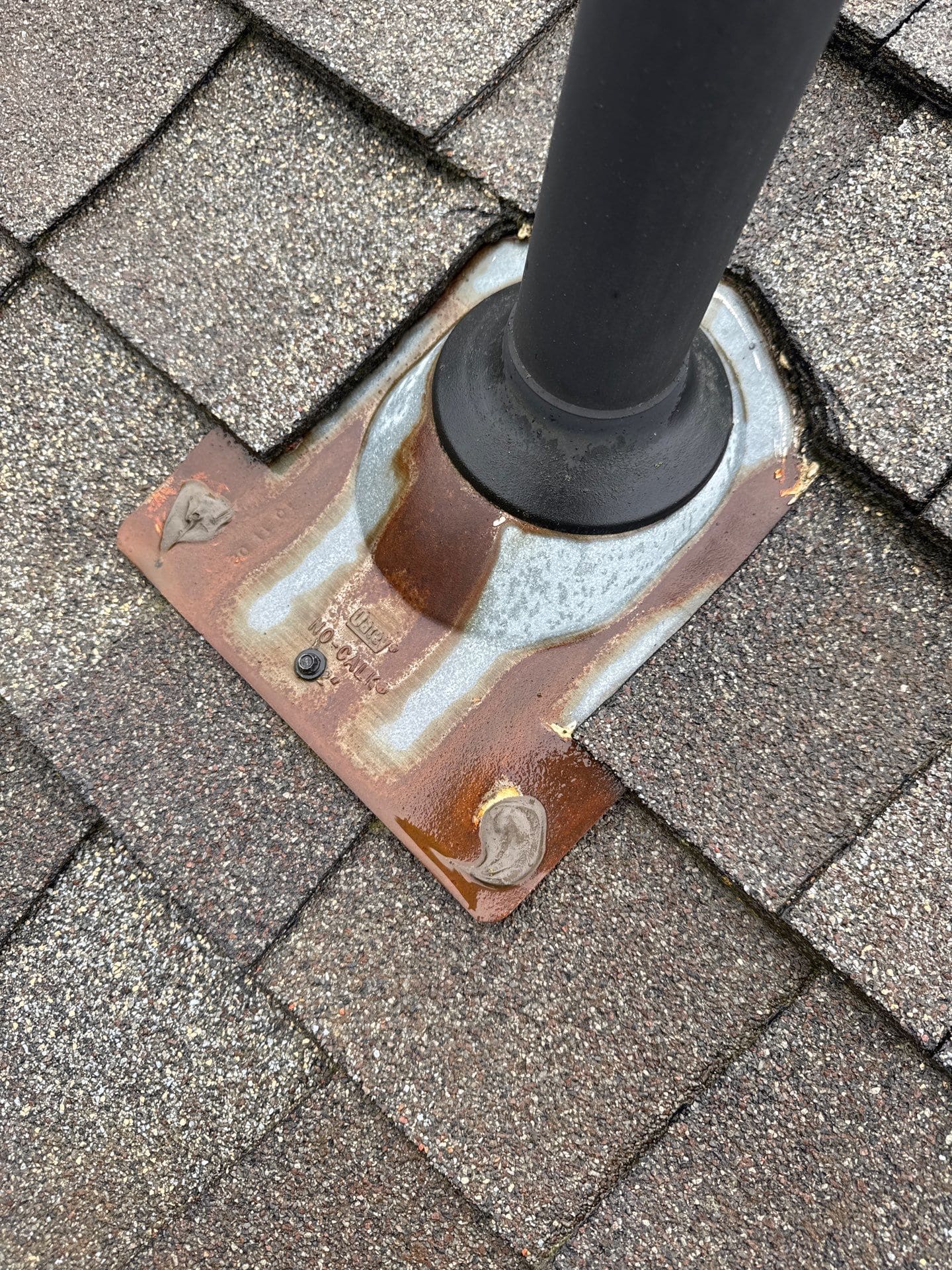
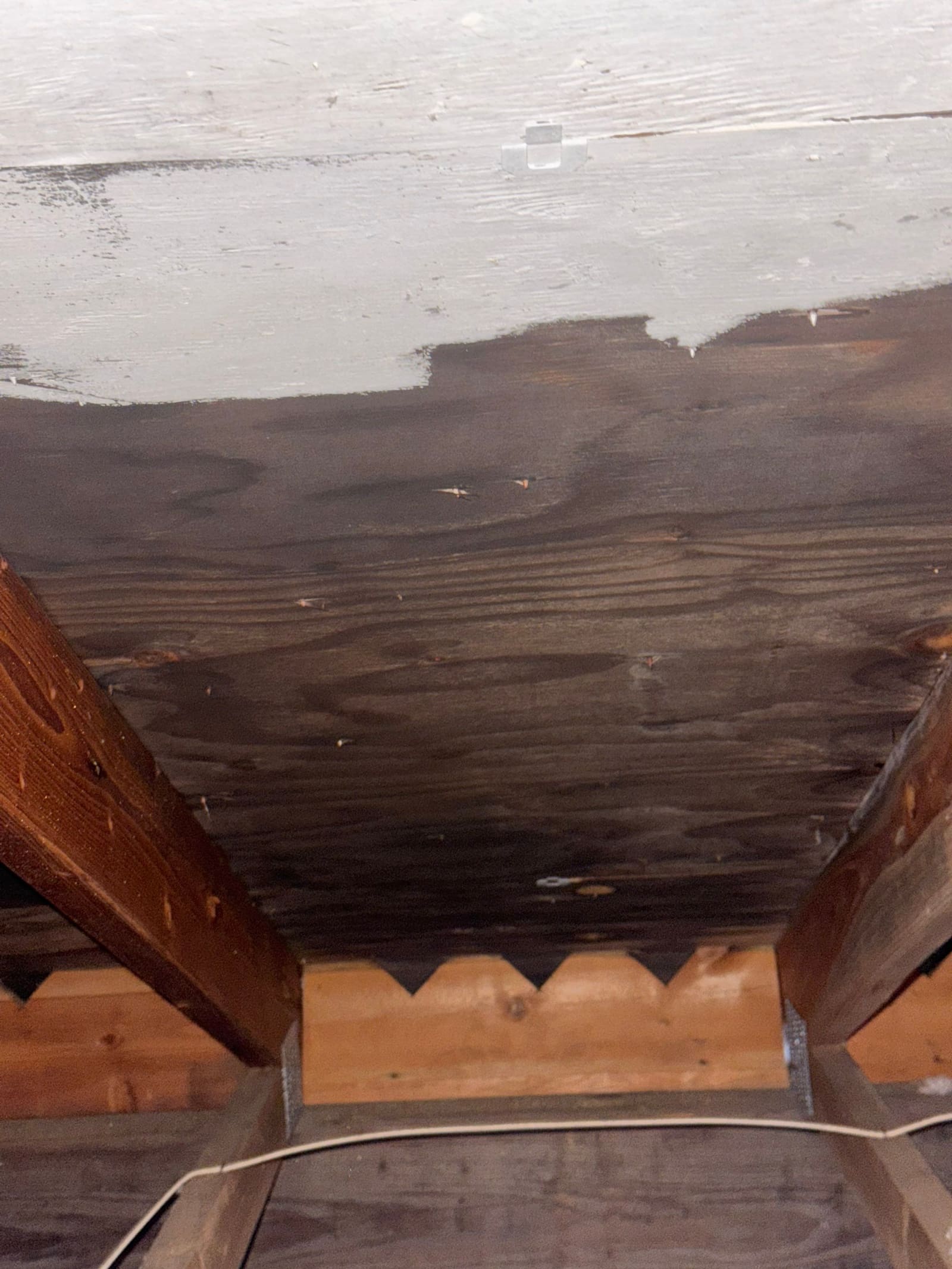
A closer inspection found an improperly positioned drainage detail that had been letting water into the roofing system. Once we opened things up, the water had already reached the decking underneath the shingles.
Step 03
Damaged Material Removed
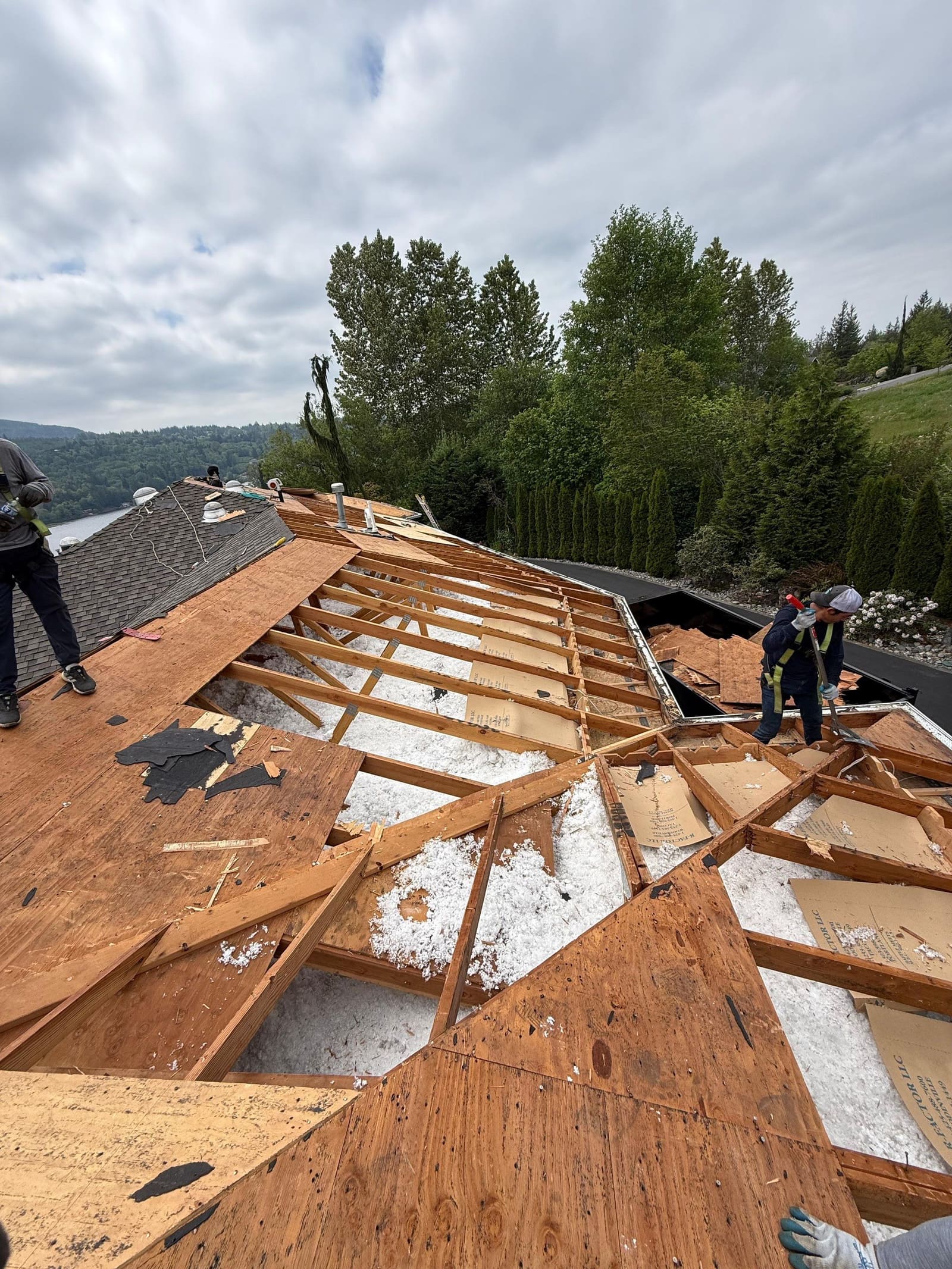
The damaged decking was removed rather than covered over. Roofing over compromised decking doesn't solve the underlying problem, it just hides it under new material.
Step 04
Restoring The Roof
With sound decking back in place, new shingles were installed to restore the affected area and get the roof back to a properly protected condition.
What Homeowners Can Learn
From This Project
Surface-level signs like moss or a small stain are often the first visible clue of a problem that's already underneath the shingles, not just on top of them.
Fixing the drainage detail that let water in was part of the repair, not an optional extra. Replacing shingles without addressing the source would have let the same problem happen again.
Damaged decking has to be removed and replaced, not roofed over. What's underneath the shingles matters as much as the shingles themselves.
Homeowner Guide
How Water Gets Into A Roof
Water intrusion usually comes from one of a handful of places, not a mystery leak that shows up out of nowhere.
Damaged shingles
Cracked, curling, or missing shingles leave the decking underneath exposed to weather.
Failed flashing
Flashing around chimneys, vents, and valleys is a common failure point when it's damaged or was installed incorrectly.
Roof penetrations
Any vent pipe, skylight, or roof-mounted fixture is a potential entry point if it isn't properly sealed.
Drainage and water-management issues
Water needs a clear path off the roof. When drainage details are positioned incorrectly, water can pool or get directed under roofing materials instead of away from them.
Aging materials
Roofing materials lose their protective qualities over time, even without any single obvious point of failure.
What To Know
Why Fixing The Source Matters
Covering water damage without addressing what let the water in doesn't solve the problem. It just delays it, and often makes the eventual repair bigger and more expensive once the damage has had more time to spread.
That's why an inspection focuses on finding where water is actually getting in, not just patching the spot where it happened to show up inside the house.
Know The Signs
What To Watch For
Water staining on ceilings or walls
Soft or spongy decking when walked on
Repeated leaks in the same area
Visible moss or heavy aging on the roof surface
Damaged flashing or other roof details
Project Gallery
Next Project
Ready To Talk About Your Roof?
Free estimates for homeowners across King County, Snohomish County, and Skagit County.
24-Hour Service · Financing Available